
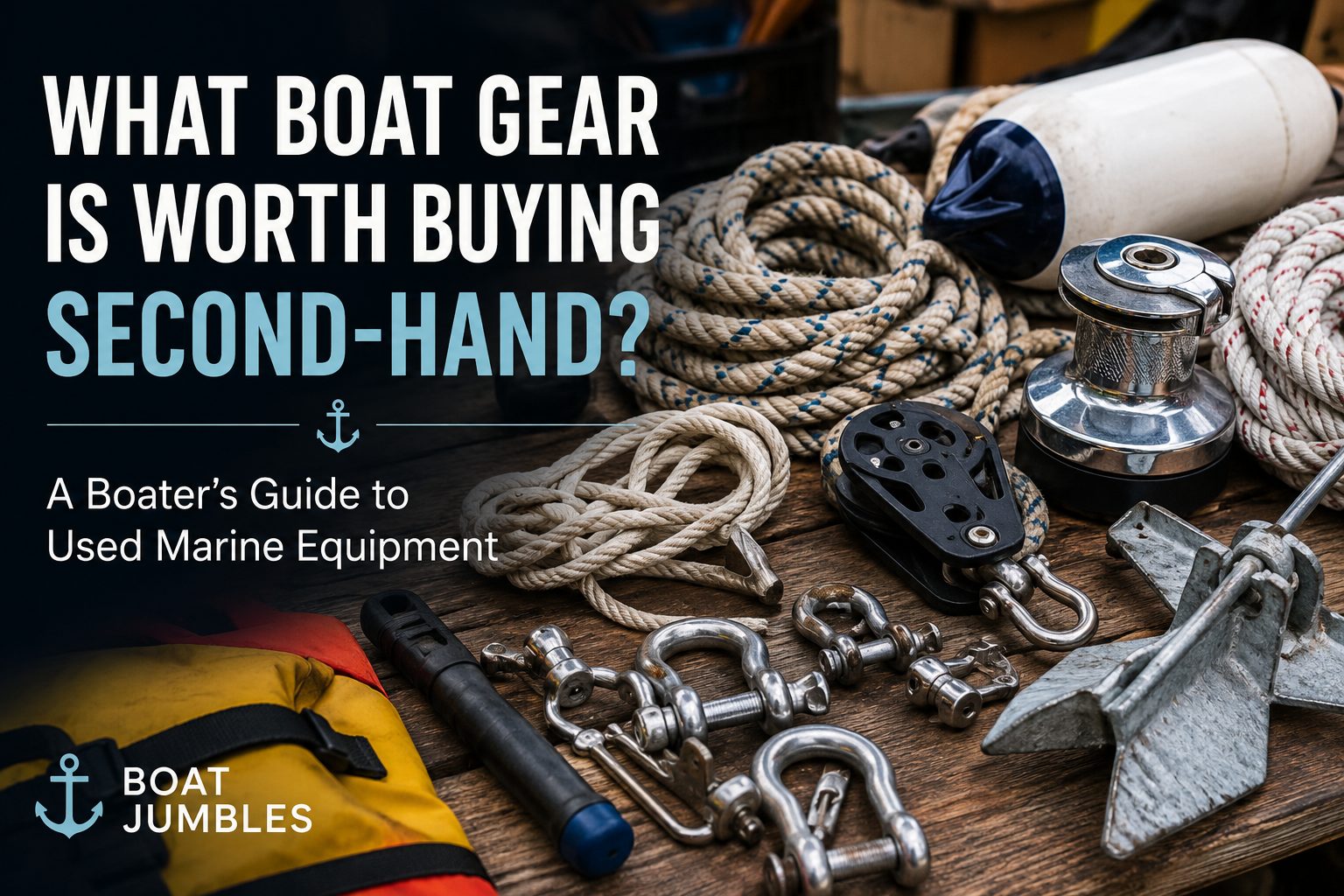
A Boater’s Guide to Used Marine Equipment.
Buying second-hand boat equipment can save hundreds or even thousands of pounds, especially if you’re outfitting a new boat or replacing worn gear. Boat jumbles are a great place to find bargains, but not every item is worth buying used.
In this guide, we’ll look at which marine equipment is usually safe to buy second-hand, what needs careful inspection, and what is best purchased new.
Quick Guide: What Boat Gear Should You Buy Used?
| Item | Buy Used? | Notes |
|---|---|---|
| Anchors | Yes | Check for damage and corrosion |
| Fenders | Yes | Inspect for leaks and splits |
| Stainless Steel Hardware | Yes | Look for corrosion and thread damage |
| Blocks & Pulleys | Yes | Check bearings and wear |
| Rope | Sometimes | Inspect carefully for wear and UV damage |
| Sails | Sometimes | Condition is key |
| Electronics | Sometimes | Technology can become outdated |
| Lifejackets | No | Safety-critical equipment |
| Flares | No | Check expiry dates |
| Safety Harnesses | No | Hidden wear can be difficult to detect |
| Fire Extinguishers | No | Service history is important |
Well Worth Buying Used
Anchors
Anchors are often one of the safest second-hand purchases. A quality anchor can last for decades if it has not been damaged or excessively corroded.
Before buying:
- Check for excessive rust.
- Look for cracks, bends or signs of repair.
- Make sure any moving parts operate smoothly.
A used anchor in good condition can perform just as well as a new one and can often be found at boat jumbles for a fraction of the retail price.
Fenders
Fenders are simple, durable items that frequently appear at boat jumbles.
Check for:
- Cracks or splits.
- Signs of air leakage.
- Damaged inflation valves.
Cosmetic marks are usually not a problem and can lead to significant savings compared with buying new.
Stainless Steel Hardware
Shackles, cleats, fairleads, stanchion fittings and similar hardware can be excellent second-hand purchases.
Inspect carefully for:
- Corrosion.
- Distorted shapes.
- Thread damage.
Marine-grade stainless steel is designed to last, and many older fittings remain perfectly serviceable.
Blocks and Pulleys
Quality blocks from well-known manufacturers can provide many years of service.
Before purchasing:
- Spin the sheaves to ensure they turn freely.
- Check for cracks.
- Look for excessive wear around attachment points.
Good blocks can often be found for a small fraction of their original price.
Hand Tools
Marine tools, spanners, winch handles and specialist maintenance equipment are often worth considering.
Check:
- Moving parts operate correctly.
- There is no severe corrosion.
- Handles are secure.
A quality older tool is often better than a cheap new replacement.
Buy With Caution
Rope
Rope can be expensive when new, making second-hand rope tempting.
Look for:
- Fraying.
- Stiffness.
- Discolouration.
- Signs of UV damage.
If you’re unsure about its history, avoid using it for critical applications such as safety lines.
Sails
Used sails can offer substantial savings, especially for cruising boats.
Inspect for:
- Tears and repairs.
- UV degradation.
- Worn stitching.
- Shape distortion.
For casual cruising, a used sail may be perfectly adequate. For racing, sail condition becomes much more important.
Boat Electronics
Chartplotters, VHF radios and instruments can sometimes be bargains, but technology ages quickly.
Check:
- Whether the unit powers up.
- Availability of spare parts.
- Compatibility with modern systems.
A cheap electronic item is not a bargain if it fails shortly after purchase.
Usually Best Bought New
Lifejackets
A lifejacket may look fine externally while having hidden damage or expired components.
Because your safety depends on it, buying new is generally the safest option. If you need a replacement, Waterworld Sports stocks a range of new lifejackets suitable for sailing and boating.
Flares
Marine flares have expiry dates and should always be within their service life.
Avoid second-hand flares unless you can verify their condition and legality.
Safety Harnesses and Tethers
These items may have unseen wear or damage from previous use.
For equipment designed to save lives, new is usually the sensible choice.
Fire Extinguishers
Fire extinguishers require regular servicing and have limited service lives.
Unless you can verify their history and condition, it is usually better to buy new.
The Golden Rule
When browsing a boat jumble, ask yourself one simple question:
Would I trust this item when I’m miles from shore?
If the answer is yes, and the item appears well-maintained, it may be a great second-hand purchase. If there is any doubt, especially where safety is concerned, walking away is often the best decision.
Boat jumbles remain one of the best places to find affordable boating equipment, but knowing which items offer genuine value can save both money and future headaches.
If you’re new to buying used marine equipment, don’t miss our Beginner’s Guide to Boat Jumbles, where you’ll find practical advice on making the most of your first visit.